RALLY EVENT GUIDE
Grasp event structures. Master reconnaissance protocols. Locate service areas. Understand regrouping sections. Navigate liaison constraints. Process final classifications accurately.
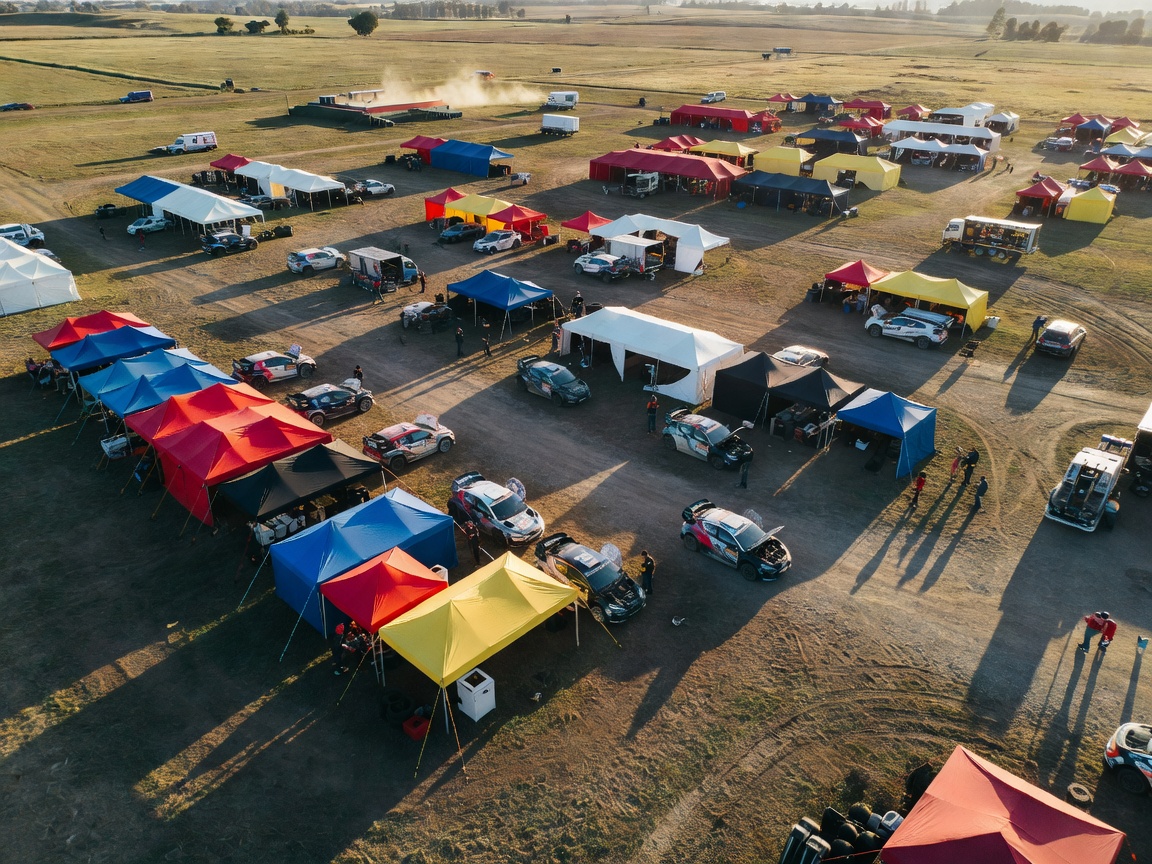
RALLY WEEKEND STRUCTURE
A European rally demands a week of presence. Monday and Tuesday focus on logistics. Headquarters open. Teams build service structures. Competitors collect documents. Wednesday and Thursday feature reconnaissance. Friday morning initiates competition. Sunday afternoon concludes the event. The structure is rigid. Deviations are not tolerated.
ADMINISTRATIVE CHECKS
Crews must present documentation before starting. Administrative checks verify licenses. They confirm vehicle registration. They validate insurance for public road sections. Navigators present medical certificates. Failing administrative checks results in immediate exclusion. Paperwork precision equals mechanical precision.
SCRUTINEERING
Technical delegates inspect vehicles. This is scrutineering. They verify homologation compliance. They weigh the cars. They check restrictor sizes. They inspect roll cages and safety harnesses. Major components receive tamper-proof seals. Engine blocks and gearboxes are marked. Replacing a sealed component without permission results in disqualification.
RECONNAISSANCE
Reconnaissance (recce) allows crews to survey the route. They drive standard road cars. Speeds are strictly limited to local traffic laws. Crews make pacenotes. The co-driver writes descriptions of every corner, crest, and hazard. Precision here dictates stage speed later. Crews typically receive two passes over each stage route.
SHAKEDOWN
Shakedown is the final test session. It occurs on a short stage representative of the main rally. Crews test suspension settings. They verify tire choices. They confirm engine mapping. Mechanics adjust setups between runs. Times are recorded but do not count toward the rally classification. It is purely diagnostic.
COMPETITION STAGES
Stages are closed public roads. Crews run sequentially against the clock. Gaps between cars are usually one to three minutes. The goal is minimum time. Stages feature diverse surfaces. Asphalt requires clean lines. Gravel requires aggressive turn-in. Stage performance forms the core metric of the rally.
SERVICE AREAS
The Service Park is the central hub. Cars return here for maintenance. Access is restricted. Time is strictly measured. Teams deploy massive resources within narrow timeframes. Fluid changes, suspension swaps, and damage repair occur simultaneously. Outside the Service Park, only the driver and co-driver may work on the car using onboard tools.
REGROUPING
Regroups manage event flow. Retirements create gaps in the running order. A regroup section holds cars in parc fermé conditions. Officials then release them to compress the field. This ensures spectators do not wait excessively between cars. Crews cannot work on vehicles during regroup.
LIAISON SECTIONS
Liaison sections connect stages. They are open public roads. Competitors must obey all traffic laws. Police enforce speed limits. Crews must navigate from stage finish to stage start within a target time. Missing this target time applies penalties. The rally never stops, even between stages.
FINAL CLASSIFICATION AND EVENT DOCUMENTATION
At the event's conclusion, cars enter final parc fermé. Scrutineers conduct post-event teardowns. They check engine capacities and turbo pressures on top finishers. Only after scrutineering clears are provisional results declared final. Official documentation is then permanently archived.
GOOD FOR
- Understanding the full scope of a rally week.
- Identifying when cars are on public roads vs closed stages.
- Learning the strict rules governing vehicle repair.
- Preparing for event attendance.
WHAT TO KNOW
- The rally begins long before the first competitive stage.
- Reconnaissance dictates competitive safety.
- Liaison sections require strict adherence to civil law.
- Scrutineering can alter results post-event.